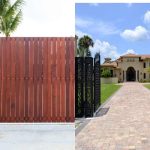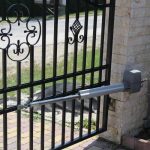



Generally speaking, an automatic driveway gate must be at least three metres away from the property line. However, the exact distance will vary depending on the type of gate, driveway slope, and local government regulations.
Most people choose their gate for how it looks. Then, too late, they find out that it won’t open correctly.
Setback is one of the most overlooked parts of automatic gate installation. Get it wrong and your gate either swings into oncoming traffic, scrapes the footpath, or fails to open fully every time a car parks too close. It’s a costly and annoying error that happens more frequently than you might imagine.
At First Choice Gates, we’ve assessed hundreds of Melbourne driveways. There is no one-size-fits-all solution; it depends on your driveway grade, gate type, council boundary regulations, and the location of your property in relation to the street.
This guide breaks it all down so you go into your installation knowing exactly what’s needed.
What Is a Gate Setback and Why Does It Matter?
Automatic driveway gates are one of the most practical additions a Melbourne homeowner can undertake – but only when the setback is carefully planned.
The distance between the edge of your property and the location of your gate when it is closed is known as the gate setback. This is the distance the gate can swing open without hitting the footpath, clipping a passing automobile or blocking a vehicle on the driveway waiting to get out.
It also affects safety. Automatic gates move with significant force. If there isn’t enough clearance, a gate can strike a pedestrian, damage a vehicle, or create a pinch point that puts people at risk.
Getting the setback right from the start saves you from costly reinstallation, council compliance issues, and potential liability down the track.
The Golden Rule: Swing Gates vs Sliding Gates
The type of gate you choose has the biggest impact on how much setback you need. These two gate styles have very different space requirements.
Swing Gate Setback Requirements
Swing gates open like doors, arcing inward along your driveway. That arc is what drives the setback requirement.
As a general guide, a swing gate needs a setback equal to the full width of the gate leaf. Therefore, if your driveway entrance is 4 metres wide and you have a double swing gate, each leaf is about 2 metres. This means that there must be at least 2 metres of clear driveway behind the gate before any obstruction, slope change, or parked car.
Here’s what affects that number:
- Gate leaf width — wider gates need more setback to complete their arc
- Opening angle — most swing gates open to 90–100 degrees; some go to 180
- Driveway slope — an upward slope toward the house reduces effective clearance as the gate swings up and back
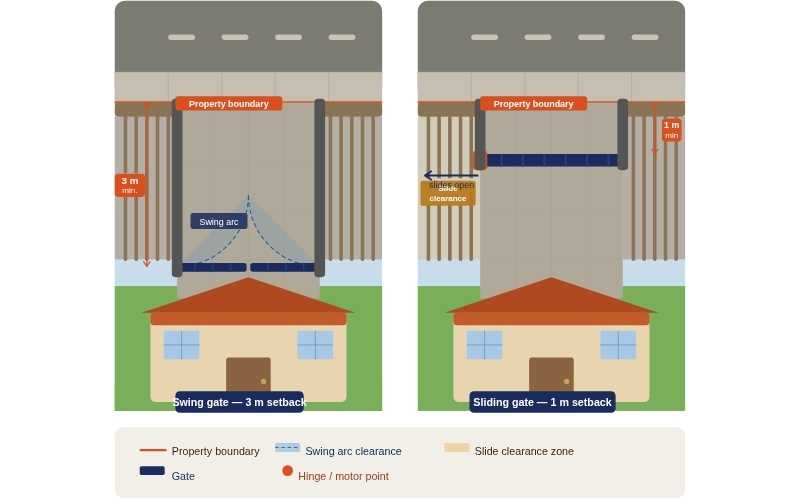
The minimum recommended setback for a swing gate in a standard Melbourne residential driveway is 3 metres from the boundary, with the gate fully closed.
Sliding Gate Setback Requirements
Sliding gates move parallel to your fence line rather than swinging inward. This makes them a popular choice for shorter driveways or steeper blocks.
They do, however, require a certain amount of space because the gate must be able to slide completely open along the fence. A 4-metre wide sliding gate needs at least 4 metres of clear fence line beside the opening to disappear into when open.
Key considerations for sliding gate setback:
- Gate panel width — the slide clearance must match or exceed the gate width
- Post and motor positioning — the drive motor and bottom track need space behind the boundary
- Side clearance — there must be enough room along the fence without trees, pillars, or structures in the way
For most Melbourne properties, a sliding gate can be positioned 1–1.5 metres from the boundary, making it the better choice for tighter driveways.
Melbourne-Specific Considerations
Footpath and Council Boundary Rules
In Melbourne, the back border of the walkway, not the edge of your driveway slab, is usually where your property boundary is located. This distinction matters enormously for gate setback.
If a swing gate is placed too close to the boundary and opens outward, it can arc over the footpath, posing both a safety risk and a compliance issue under local council planning regulations.
Most Melbourne councils require that gates open inward only, and that no part of the gate or its arc crosses the property boundary during operation. Some councils in higher-density areas such as inner Melbourne, Stonnington, and Boroondara have additional requirements around gate setback as part of planning permit conditions.
We always recommend that you check with your local council before installing anything, especially if your property is in a heritage overlay or special character zone.
How Slope and Driveway Angle Affect Setback
Melbourne’s topography is varied. Many properties, particularly in the Hills districts sit on blocks with significant gradient.
A sloped driveway changes the effective swing arc of a gate. As a gate swings open on a rising slope, the bottom raises, lowering ground clearance and occasionally causing the gate to drag or bind. This means the physical setback may need to be greater than the flat-ground calculation to allow the gate to operate cleanly.
On steep blocks, sliding gates are often the more practical and safer solution. They eliminate the swing arc problem entirely.
What Happens If You Don’t Get the Setback Right?
Incorrect setback causes a cascade of problems that go beyond inconvenience:
- Gate strikes the footpath or kerb — causing damage and creating a trip hazard
- Gate clips vehicles — particularly in narrow driveways where cars park close to the gate
- Automation system strains — motors work harder when a gate can’t complete its full travel, shortening the lifespan of the operator
- Council compliance failure — a gate that crosses the boundary line may require removal or relocation at your cost
- Safety sensor interference — if the gate arc is too tight, safety beams may trigger false stops, leaving the gate partially open
These aren’t edge cases, but they are fixable. At First Choice Gates, we can assess your driveway, identify the issue, and get your gate operating exactly as it should.
How to Measure Your Setback Before Installation
You don’t need to be a tradesperson to get a rough sense of your setback before calling in a gate company. Here’s how to do a basic assessment:
- Locate your property boundary — this is usually the back of the footpath or a surveyed peg. If unsure, your title documents or a quick call to your council will confirm it.
- Measure from the boundary inward — mark where your gate would sit in the closed position.
- For swing gates — measure the width of your driveway opening and divide by two (for a double gate). That figure is the minimum arc clearance you need behind the gate.
- For sliding gates — measure the full width of the opening. You need that same distance available along the fence line beside the opening.
- Check for obstacles — garden beds, pillars, steps, and level changes all reduce usable setback space.
- Factor in your slope — if your driveway rises toward the house, add at least 300–500mm of extra setback to account for the gate arc lifting off the ground.
This gives you a working estimate. A professional assessment will confirm the exact requirements for your specific site.
When to Call in the Experts
A setback calculation may appear simple on paper, but each Melbourne driveway has its own idiosyncrasies. Whether you’re installing security gates in Melbourne‘s inner suburbs or on a rural-style property on the urban fringe, the site variables change significantly. Tight blocks, unusual angles, sloped entrances, heritage fencing, and council overlays all add layers of complexity.
Getting it right the first time means your gate operates smoothly, meets compliance requirements, and lasts the life of the automation system without straining motors or creating safety risks.
That’s where experience matters.
Not sure about your gate setback?
Get a free on-site driveway assessment from Melbourne’s gate specialists.
The Bottom Line for Melbourne Homeowners
Automatic driveway gates require a minimum distance of 3 metres for swing gates and 1-1.5 metres for slide gates, as measured from the property boundary. But your actual requirement depends on gate width, driveway slope, and local council rules.
Don’t leave this to guesswork. A gate installed with the wrong setback is a gate that causes problems from day one.
At First Choice Gates, we’ve installed and assessed gates across Melbourne for years. We carry out full on-site assessments before any installation begins. We measure, check council standards, and recommend the best gate type for your specific driveway, ensuring that everything functions well from the minute it’s switched on.
Ready to get it right the first time? Contact First Choice Gates today for a free driveway assessment.
Related: Single Vs Double Driveway Gates